An Oklahoma Surrogacy Journey that Led to a Surrogacy Transparency Venture: An Interview with Kevin Timms
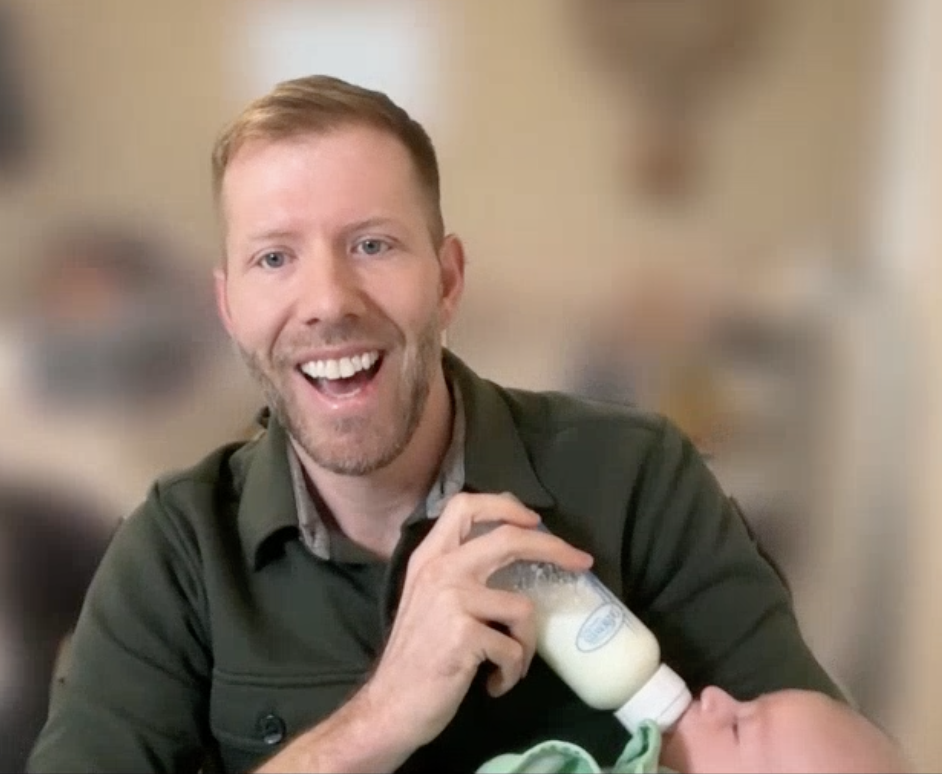
Kevin and Charlie making new dad and baby life look effortless during the interview.
Family Location: San Francisco, California, USA
Delivery Location: Oklahoma, USA
Egg Donation Agency: None (known donor)
Fertility Clinic: Spring Fertility (https://springfertility.com/)
Surrogacy Agency: Hearts to Hands (https://hearttohandssurrogacy.com/)
Legal Firm: Joni Franklin (https://www.jfranklinlaw.com/joni-franklin)
Estimated Timeline: (From making embryos to coming home): From embryos was like ~6.5 years; from actually deciding to turn them into Charlie - 1.5 years
Estimated Total Cost (IVF + surrogacy + legal + travel): $200,000 - $220,000 (Range is because of some employee benefits)
Kevin Timms sits feeding his adorably swaddled son, Charlie, as we talk about his path to fatherhood, the surprises of surrogacy, and his dedication to surrogacy transparency for other intended parents (IPs).
Fertile Ground for Fatherhood
Kevin is a data scientist who has lived in San Francisco for 11 years. He acknowledges that gay culture in SF is ‘unique.’ While any type of gay man is welcome in the city given its historic place in LGBTQ+ history, gay fatherhood is a newer addition to the rainbow spectrum of SF.
Kevin knew well before he moved to SF that he wanted to be a dad. He describes an idyllic small town upbringing with a family of three sisters and loving parents. Fortunate to have such loving examples of parenthood, family, and community, Kevin’s upbringing made fatherhood the ultimate goal. As long as he can remember, he wanted to ‘bring good people into the world’ and share a ‘love that lasts.’
Knowing what you want and knowing how to get it are two different things. Despite his incredible upbringing, Kevin didn’t have a model for fatherhood as a gay man. Consequently, he delayed his own coming out, believing that his dream of fatherhood had to come from a relationship with a woman. However, once Kevin discovered that fatherhood was possible through in vitro fertilization (IVF) and gestational surrogacy, he felt free to be himself and unapologetically describe his family desires in the gay SF dating scene.
About 6 years ago, Kevin and Lawrence met at a gay Halloween Party.

San Francisco knows how to do gay Halloween.
Shortly after, they had their first date. At this time, he was 33 years young and felt his own biological clock was ticking. Deciding to lay all his cards on the table, he shared with Lawrence on that first encounter that kids were in his plan, and that if Lawrence was not okay with that, they could just part ways.
Kevin’s authenticity and directness paid off, for him and for Lawrence. They wanted the same thing, and so they started shortly thereafter to plan for their rainbow family through surrogacy.
A Man With a Plan…That Does Not Go Exactly According to Plan
Kevin is a self-described type A planner.
He was planning to be a father from a very young age, and he started planning for his surrogacy journey years before Charlie would arrive on the scene.
His initial desire for surrogacy as the pathway to fatherhood stemmed from the genetic connection. Many gay men share this desire, and recognizing this is a critical step in helping decide if gay intended fathers will consider adoption or fostering. However, some gay dads choose surrogacy for logistical or emotional reasons. This was demonstrated in a 2017 study on gay fathers’ motivations for and feelings about surrogacy:
‘We liked surrogacy really because what we had read about adoption, it seemed like quite a random process, and you weren’t in control. Even after the child was born, there were all sorts of stipulations and criteria by which you, for no reason of your own, lose your child. And we just thought let’s keep it simple, it’s complicated enough being a parent.’ (1)
Kevin admits that as he went through the process, the genetic connection became secondary to the ‘idea of family.’ This sentiment is shared by other gay men, as the previous study showed that most gay dads felt the same connection to their child after a surrogacy journey, regardless of a genetic connection (1).
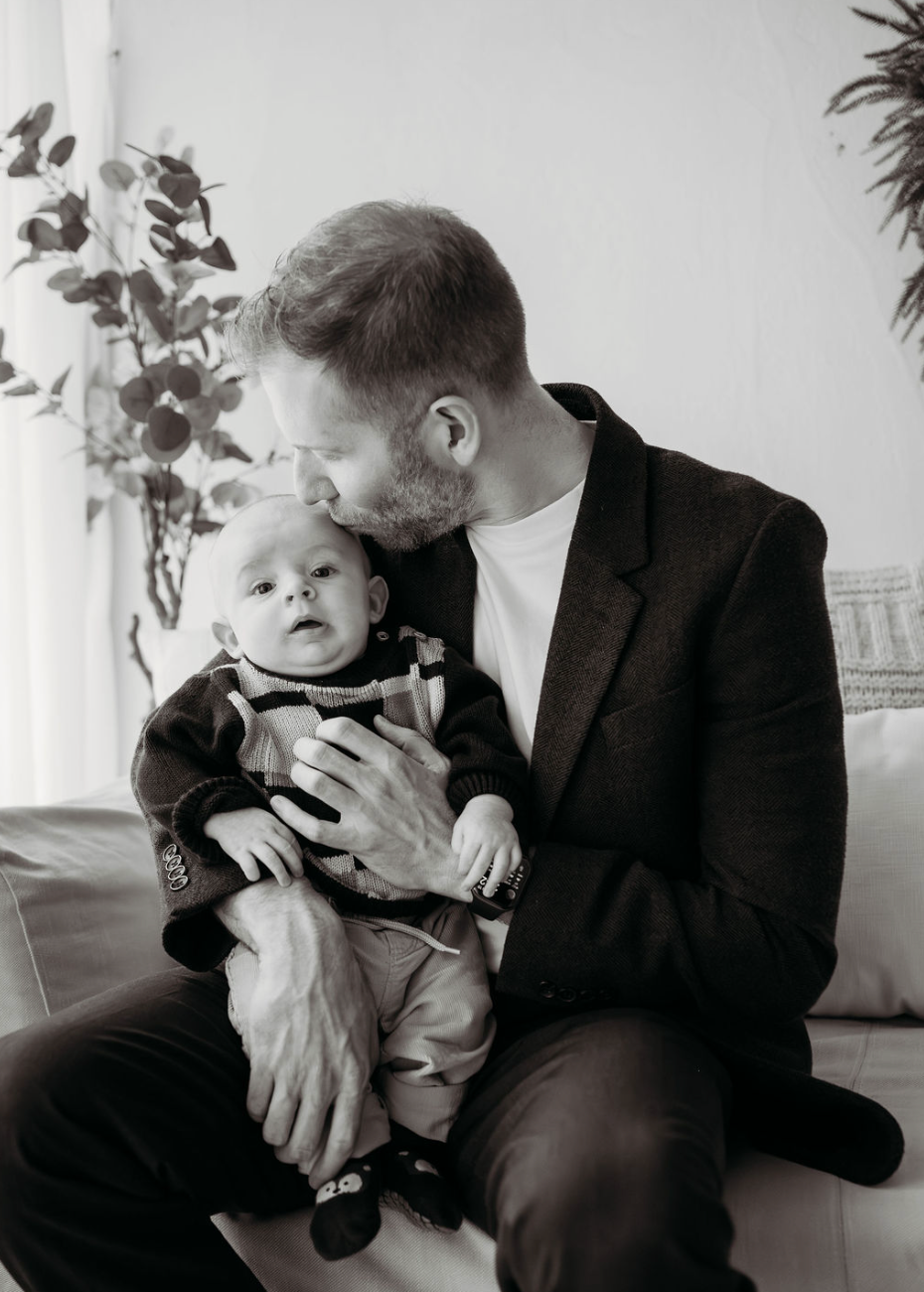
Kevin and Charlie looking dapper together.
Back to Kevin’s planning.
One of Kevin’s good friends from college had gone through a surrogacy journey about two years prior. He set up a Zoom call with the other couple, and went through all the details of their journey. He was given spreadsheets, contact information, and recommendations regarding fertility clinics and agencies. In addition to this, Kevin did his own research. Being a data scientist, research and data collection came naturally, and Kevin felt that through these steps, he was well-informed and knowledgeable about what to expect on the journey.
Enter the surprises.
Not to bury the lead, but the surrogacy journey worked out. Charlie is here and healthy and amazingly loved by Kevin and Lawrence.

Charlie’s first Christmas.
However, there were good and less good surprises along the way.
The first good surprise was that they matched with their incredible surrogate within 3 months of starting their journey. At a time when gay intended dads (including myself) waited 12 months for a match, 12 weeks is a dream. Kevin describes their relationship with their surrogate as completely ‘organic.’ They texted a great deal before, during, and continue now months after the birth of Charlie. She would FaceTime during all appointments where the dads could not be there in person, and Kevin says that she was an amazing part of their journey that he wouldn’t change. This dynamic and communication is ideal and in stark contrast to some gay intended fathers’ journeys in Mexico.
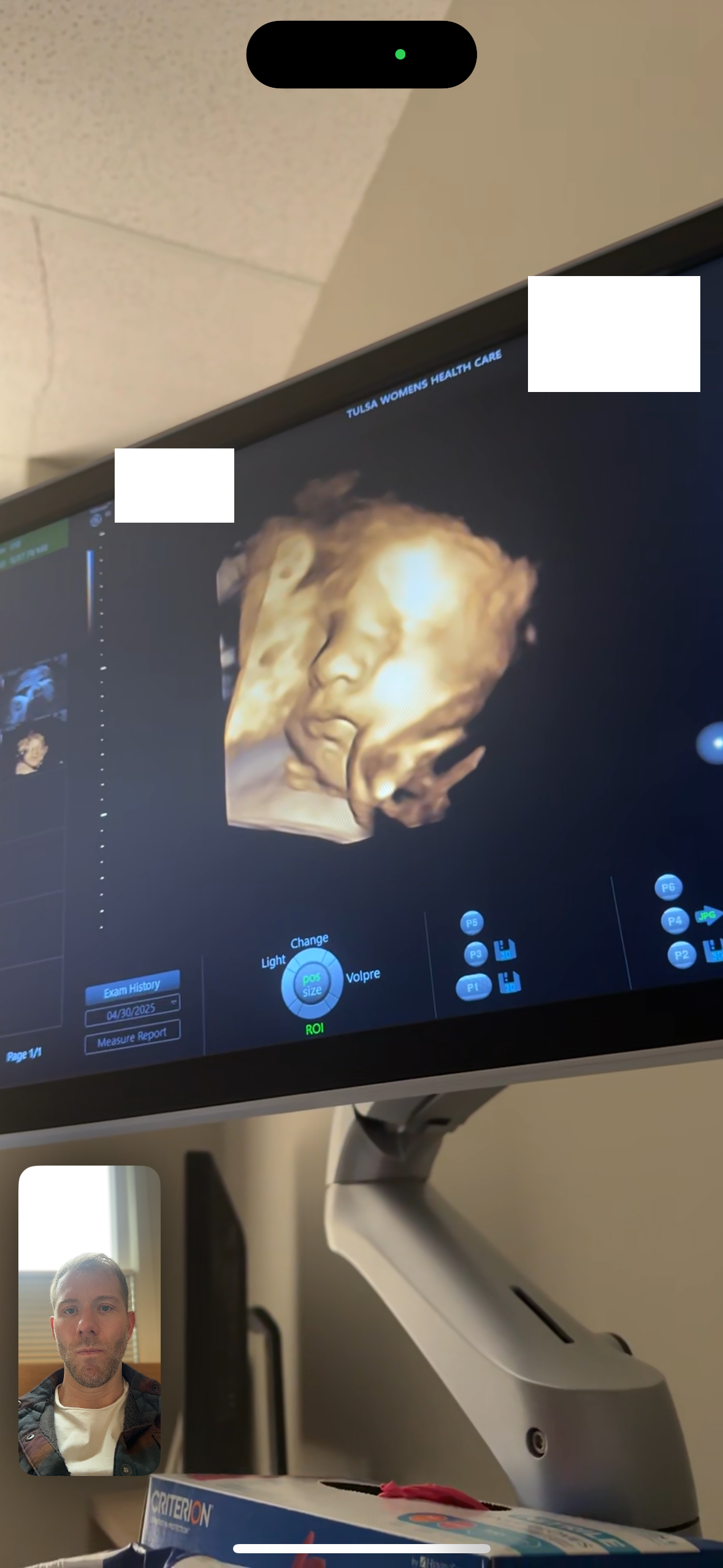
A screenshot of Kevin FaceTiming during the 3D ultrasound.
Then came the less good surprise: Their surrogate was in Oklahoma. Travel to and from Oklahoma was challenging and expensive, costing between $1500 and $2000 per person. Also, Oklahoma has some unique legal requirements, such as mandating that the hospital has to approve her as a surrogate before she could start her hormone cycle for the embryo transfer.
Kevin and Lawrence were not informed of these challenges prior to matching, and with their relationship well on their way, they didn’t want to unmatch or derail the journey. This is a common theme for many surrogacy journeys, where decisions are made (perhaps without all the information and context) and IPs are left to adapt to the situation and plow ahead.
Surrogacy regulations vary by U.S. state, and there are online resources that try and help IPs navigate them. One is the U.S. Surrogacy Law Map:
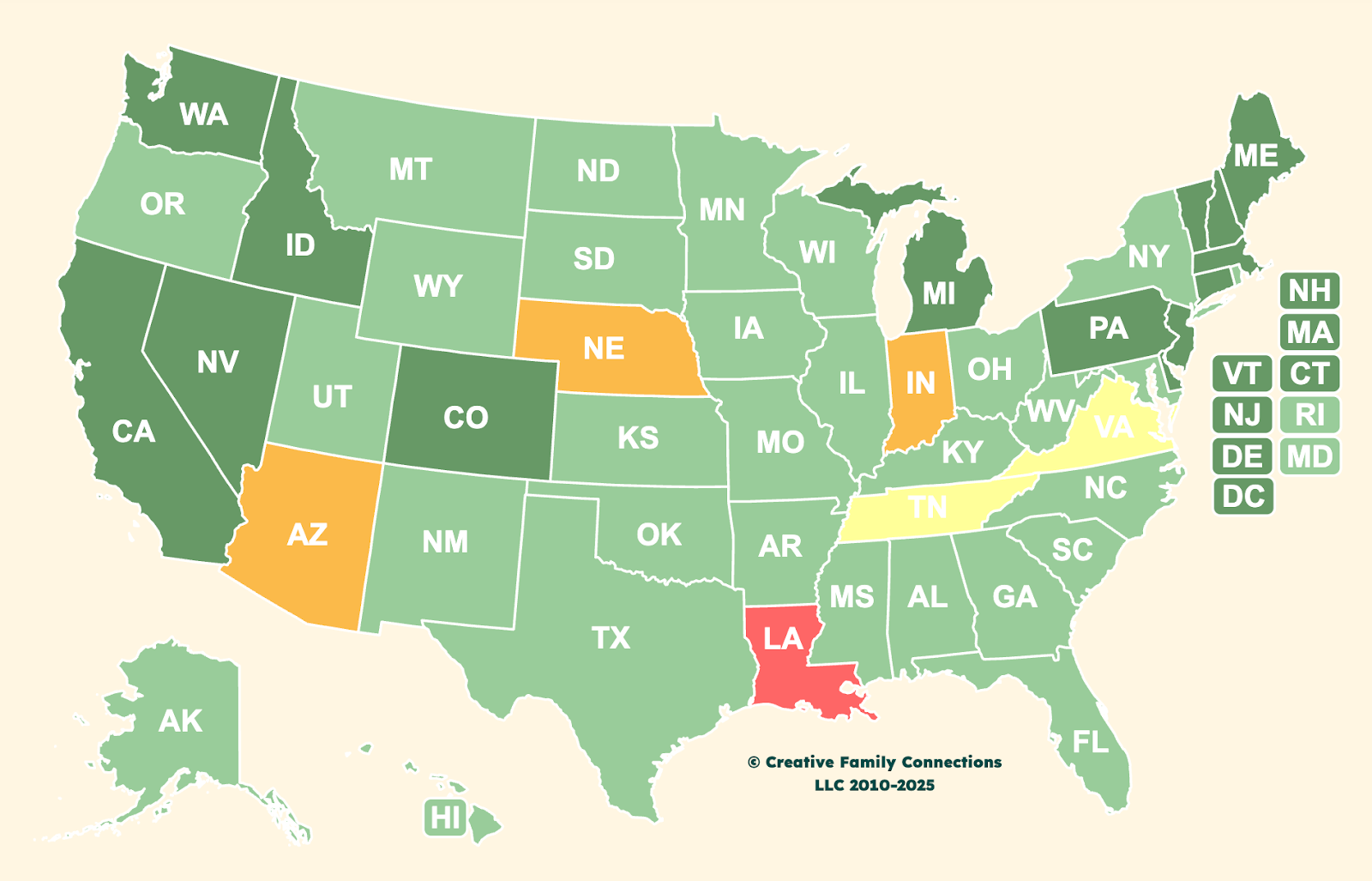
This map is color coded with dark green being the most surrogacy friendly, followed by light green, yellow, orange, and red. In orange states, surrogacy is practiced and courts issue parentage orders, but surrogacy contracts are void and unenforceable by statute. In red states, statute or published case law prohibits compensated surrogacy contracts, or a birth certificate naming both parents cannot be obtained.
The map is also interactive, and you can click on a state to get more information. The Oklahoma page does include information on parentage, birth certificates, and information for international IPs. It’s a very useful resource that is kept as up to date as possible, but it doesn’t say anything about hospital approvals prior to a transfer.
To Kevin’s point, there is so much in this process that is impossible to know or plan for. While there is an expectation that the clinic, agency, and/or lawyers will inform you of all possible challenges, there are still surprises and aspects that IPs have to navigate.
Jokingly, Kevin felt himself wearing ‘many hats’ during his journey. He went from being an Oklahoma legal expert to a prescription pricing expert when it came time to order transfer medications. He then transitioned to a medical insurance expert when he had to review his HMO prior to the delivery. While some agencies are more full service than others, there are still numerous aspects to a surrogacy journey that IPs have to learn and will be unique to their particular scenario.
This experience changed Kevin. Not only did it make him a proud gay dad, but also it made him promise that if it worked out, he would do something to help others and reduce the number of journey surprises.
Figly Health: Giving Back to the Surrogacy Community
Despite being a sleep deprived new dad, Kevin is keeping to his promise to the surrogacy community. While his primary job is as the founder and CEO of Tea Leaf Health, an AI platform for patient engagement, he is also now working and leveraging his data science expertise for Figly Health.
Figly Health attempts to address many of the surprises and challenges that Kevin experienced on his own journey.
Figly Health currently offers personalized quotes for IPs, leveraging data across the industry in order to provide risk-based, informed estimates for an assisted reproduction journey.
Here is an overview of some of their services:
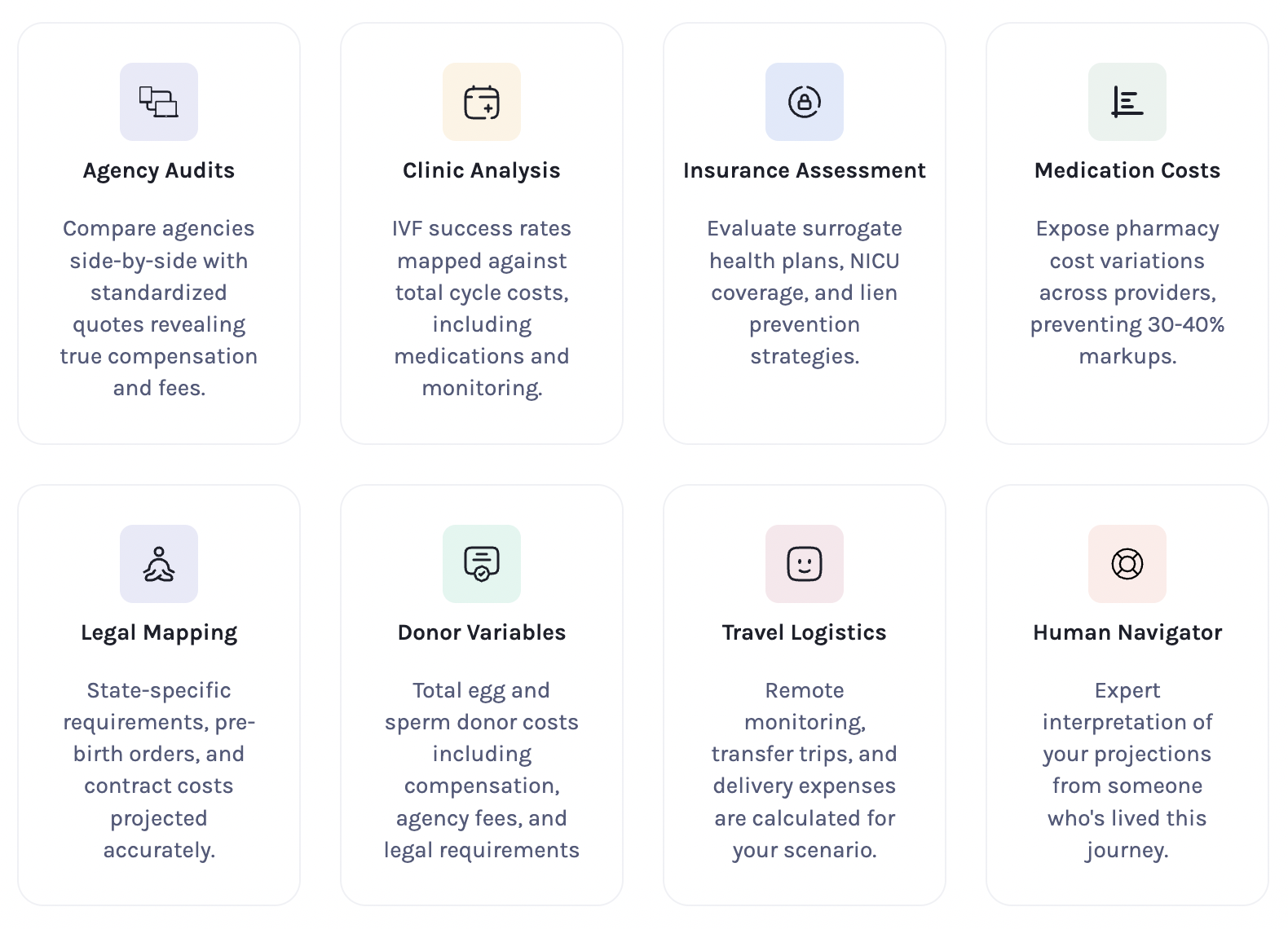
Kevin describes the primary goal of Figly Health as a way to help IPs 'avoid financial surprises on their journey.’
The Figly Health platform is working to accomplish this through transparency and information sharing that allows for customization to a particular journey. While still in early stages, Kevin says that Figly Health and the methodology could also be applied to international journeys, both for international IPs in the U.S. and all IPs going to other destinations like Mexico.
Kevin has transformed his surrogacy surprises into a data-driven tool that enables IPs to really understand all aspects of their journey and hopefully avoid surprises, delays, and additional costs along the way.
Advice to Intended Parents
Although Kevin is trying to make surrogacy as transparent and streamlined as possible through Figly Health, his advice to IPs is still to ask questions.
‘Ask more questions than you possibly think you could,’ he advises. He even recommends asking the same question to different people, as he was given different advice from four different California-based lawyers regarding Charlie's delivery, and only the last lawyer provided the most accurate information and connections to a colleague with expertise in Oklahoma.
His final piece of advice to IPs is ‘Try to enjoy it.’ While it’s in his personality to plan, worry, and perseverate on the details, he admitted that this occasionally distracted him from the end goal of having a baby.
Gay men do so much to have a baby via surrogacy. After all the saving, planning, and worrying, you have to make space to be present and enjoy it. During his embryo transfer, he had a moment when he realized that these few minutes have the ability to completely change his life.
And they did.

The life changer, Charlie.
And now he wants to help other IPs get as much enjoyment and as few surprises as they can on their own journeys.
References:
