The Novel 'The Giver' Reads Differently as an Intended Parent Going Through Surrogacy
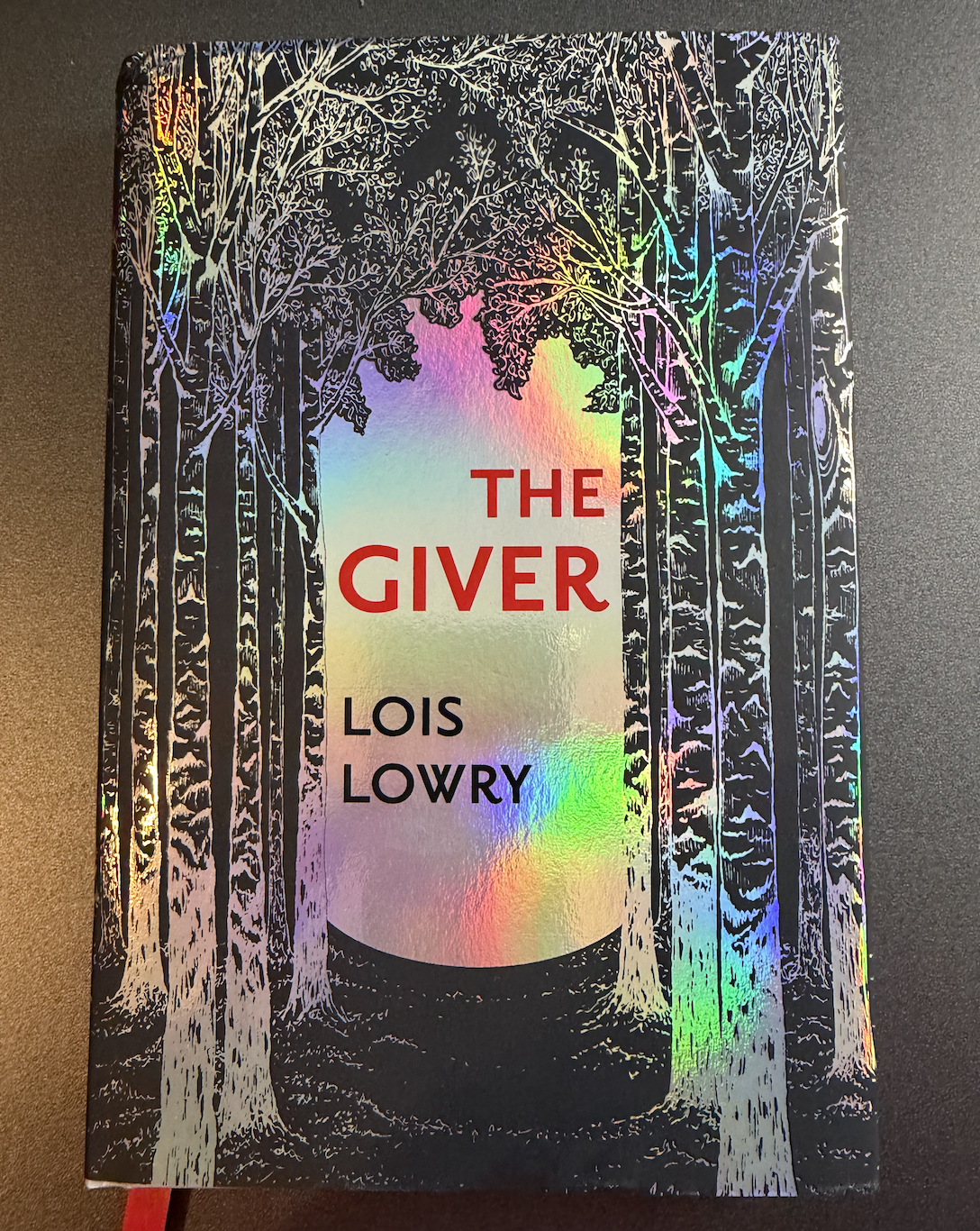
I love this shiny cover.
In an effort to tap into some childhood nostalgia, I decided to re-read one of my favorite books from elementary school: ‘The Giver.’
Originally published in 1993, I was one of the early readers of this book that has continued to captivate children all over the world for the last 30+ years. While ‘The Giver’ is read by elementary and middle school aged children, I remember feeling like a ‘grown up’ reading it. Its dystopian setting paints a colorless picture of a controlled and loveless existence. Topics like individuality and death are heavy themes, but they are written with care and are digestible for younger readers.
Now, as a 40-something year old gay, intended dad, I could not help but be struck by the assisted reproduction described in the book.
In the Community, every person is assigned a job at age twelve, and the Elders select their role for them based on their aptitudes and interests. There are Engineers, Doctors, Nurturers, and every role needed for the society to function.
One role is that of Birthmother.
One evening, Jonas (the protagonist) and his family are sitting around the dinner table, and Jonas’ younger sister, Lily, suggests that it would be fun to be a Birthmother. Their Mother immediately dismisses this notion, saying:
“Lilly!” Mother spoke very sharply. “Don’t say that. There’s very little honor in that Assignment.”
Even when Lily protests and describes how well the Birthmothers are taken care of and how nice their life is, her Mother continues:
“Three years,” Mother told her firmly. “Three births, and that’s all. After that they are Laborers for the rest of their adult lives, until the day that they enter the House of the Old. Is that what you want, Lily? Three lazy years, and then hard physical labor until you are old?”
Of course Lily says no. Who would want that? In the Community, people aren’t really given a choice, but what I found interesting is that we are not setting up kids who read this book to really have an open mind when it comes to surrogacy.
While Lois Lowry doesn’t make it clear if the Mother and Father of each family unit are the biological parents of their children, the assumption is not. The Community is controlled and genetically manipulated, so it’s likely that children are not genetically related to their parent(s) as is the case through real world IVF and surrogacy.
However, the take home message - especially for impressionable young people - is that a woman who carries and delivers a baby for someone else is not worthy. It’s not a good job. It’s not an honorable role. It’s not something anyone should want for themselves.
I know this is in the context of the horrific, fictional setting of the book. Lois Lowry and others could argue that this compartmentalization of family building was meant to exemplify the lack of emotion and love that is core to the book.
But that is the problem.
Children internalize the message as surrogacy or any assisted reproduction is one that is lesser than traditional family building. It is the way to make a loveless family, not a ‘real’ family like the one gathered around the Christmas tree in the Giver’s favorite memory.
Generations of children have and will continue to read this book. In so many ways, it’s an incredible story about what it means to be different, to choose our own path in life, and to embrace our emotions as humans. I loved it as a kid, and I still loved parts of it as an adult. I just can’t unsee the negative impact that this story has on surrogacy in the real world. I think it works to bias young people to surrogacy in a way that they may not even be conscious of.
I know I can’t change the story. It’s a classic and will continue to be read for many years in schools all over the world. However, I can prepare for when my kid reads it in school. I am sure they will have thoughts on the Birthmothers, as they will know their own surrogate. I don’t want them to think of her as lesser or dishonorable. I don’t think there is anything more honorable than helping someone, especially when that comes to doing something that they could never do on their own. Something like helping my husband and I have a child and a family.
